
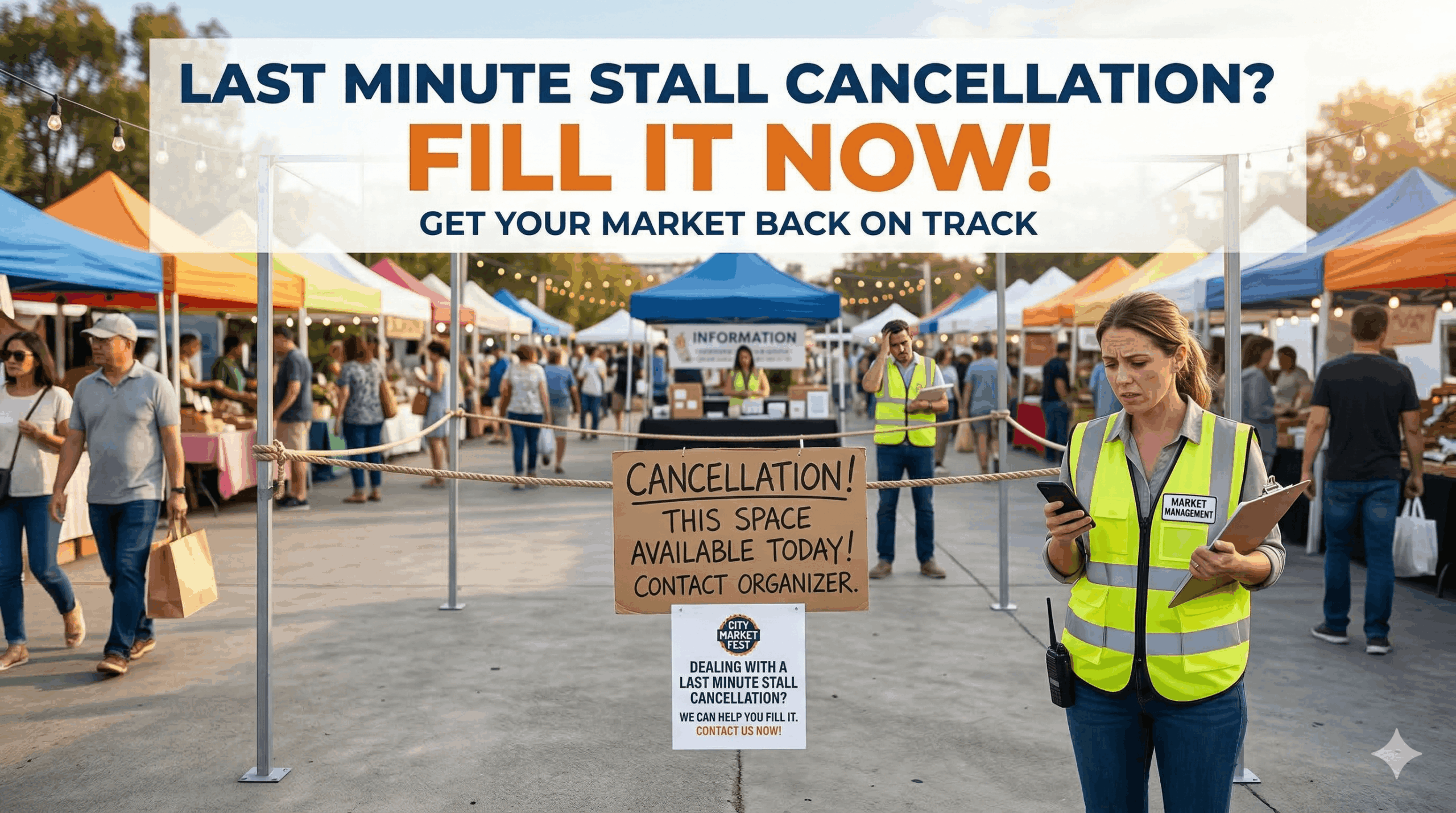
For most market organisers, there’s one message that instantly raises stress levels:
“Sorry, I won’t be able to attend the market this weekend.”
Last-minute vendor cancellations happen more often than organisers would like. Illness, family emergencies, weather concerns, and travel issues can all cause stallholders to withdraw close to the event date.
When it happens, organisers are suddenly left with empty stalls, disrupted layouts, and very little time to find replacements.
The good news is that with the right systems in place, vendor cancellations don’t have to derail your event. Here are several practical ways organisers can reduce cancellations and quickly fill empty stalls when they happen.
1. Require Payment When Vendor Applications Are Approved
One of the simplest ways to reduce last-minute cancellations is to collect payment when an application is approved.
When vendors have already committed financially, they are far less likely to cancel at the last minute. It also removes the need for organisers to chase invoices or follow up on unpaid stall fees.
Many organisers now handle payments as part of their vendor application process. For example, when using LocalStalls with credit card payments enabled, a vendor’s card can be charged automatically once their application is approved.
This approach helps organisers:
- secure stall fees earlier
- reduce unpaid invoices
- discourage casual cancellations
Vendors are also more likely to treat the booking as confirmed once payment has been processed.
2. Maintain a Vendor Waitlist
A vendor waitlist is one of the most useful tools a market organiser can have.
Once your event reaches capacity, additional applications can be placed onto a waitlist rather than declined outright. If a confirmed vendor cancels, you already have interested vendors who may be able to step in.
Without a waitlist, organisers often find themselves scrambling to find replacements.
With LocalStalls, once your event reaches capacity, new vendor applications can automatically be placed on a waitlist. This ensures you always have potential backup vendors ready if a stall becomes available.
Having a waitlist can often mean filling a cancelled stall within minutes rather than hours.
3. Use Social Media to Find Last-Minute Vendors
If a cancellation happens close to the event date, social media can be one of the fastest ways to reach vendors.
Many stallholders follow markets and events they’re interested in attending, so a quick post can sometimes fill a spot surprisingly quickly.
A simple post such as:
“Last minute stall available at this weekend’s market. If you’re a local maker or food vendor and available, send us a message.”
can often attract immediate interest.
If you use LocalStalls, organisers can also schedule social media posts from within the platform to quickly reach followers who may be interested in the opportunity.
4. Contact Vendors in Your Database
Another effective strategy is to reach out to vendors who have previously applied to your events.
Even if a vendor couldn’t attend earlier, they might now be available for a last-minute opportunity.
Rather than sending individual messages, organisers can notify multiple vendors at once. Using LocalStalls, organisers can send messages to their vendor database via:
- push notifications – straight to their phone!
- SMS
This allows organisers to quickly let vendors know that a stall has become available.
Often the fastest replacement vendors are those who have already participated in your events before.
5. Adjust Your Floor Plan if Needed
Sometimes a stall can’t be filled immediately, particularly if a cancellation occurs the night before the event.
In these situations, it can help to adjust your layout to avoid obvious empty gaps.
Some organisers choose to:
- expand neighbouring stalls
- move stalls closer together
- re-balance sections of the market
Small layout adjustments can make the market feel fuller and maintain a better experience for visitors.
Create a Clear Vendor Cancellation Policy
Having a clear vendor cancellation policy can prevent confusion and help organisers manage expectations.
When policies are unclear, disputes about refunds or cancellations are much more likely. Clear guidelines ensure both organisers and vendors understand the rules before the event.
Below is a simple example organisers can adapt for their own events.
Example Vendor Cancellation Policy Template
Vendor Cancellation Policy
- Cancellations made more than 14 days before the event will receive a full refund.
- Cancellations made 7–14 days before the event may receive a partial refund if the stall can be filled from the waitlist.
- Cancellations made within 7 days of the event are non-refundable.
Vendors who cancel repeatedly or fail to attend without notice may not be prioritised for future events.
Final Thoughts
Vendor cancellations are a normal part of running markets and events. Even well-organised events will occasionally have stallholders withdraw at the last minute.
The key is having systems in place that make cancellations easier to manage.
By collecting payment upon approval, maintaining a waitlist, reaching out to vendors quickly, and using your vendor network, organisers can often fill empty stalls faster than they expect.
With the right preparation, even a last-minute cancellation doesn’t have to disrupt your event.